Source Aluminum Cookware Hydraulic Press for Sinks Pots Filters
Find 21 aluminum cookware hydraulic press units from verified Chinese manufacturers. Buyers can compare four-column deep drawing machines with 200-ton capacity, ISO9001 certifications, and options for kitchen sink, pot, and oil filter production.
Key considerations
Products List


Comprehensive Sourcing Guide
Strategic Sourcing Guide for Aluminum Cookware Hydraulic Presses
Understanding the Core Technology and Configuration
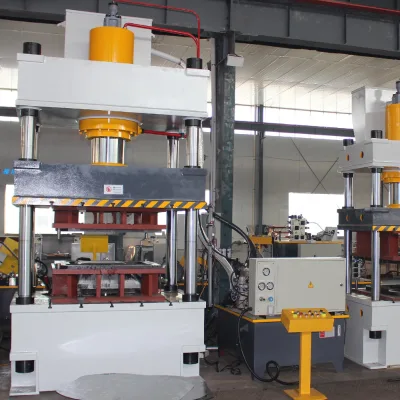
When sourcing equipment for the production of aluminum cookware, the primary focus must be on the hydraulic press configuration that aligns with deep drawing and stretching requirements. The market offers several variations, but the most prevalent and effective configuration for this specific application is the four-column hydraulic press. This structural design provides superior stability and uniform pressure distribution, which are critical when forming aluminum sheets into complex shapes such as kitchen sinks, pots, and oil filters. The four-column architecture ensures that the ram remains parallel to the bed throughout the stroke, minimizing the risk of uneven deformation that can lead to material thinning or tearing.
Buyers should verify the specific tonnage capabilities of the machinery against their production volume needs. Observed market listings indicate a range of capacities, with 200-ton models being a standard offering for high-efficiency cookware manufacturing. These machines are often described as "Four Column Deep Drawing Hydraulic Presses" or "Four Column Automatic Cookware Making Hydraulic Presses." The automation level is another critical differentiator; some units are designed for manual operation, while others feature automatic feeding and ejection systems to increase throughput. The power source for these units is exclusively hydraulic, driven by a motor system that can range from standard configurations to advanced servo motor systems. Servo motors offer precise control over the press speed and force, which is essential for the delicate process of deep drawing aluminum without causing surface defects.
The physical dimensions of the press are also a key specification to consider. Standard models may adhere to specific size standards, such as 1800x1700x4500mm, while others offer customized dimensions to fit specific factory layouts. The weight of the machine is substantial, with observed models weighing approximately 9.2 tons, necessitating a reinforced factory floor. The surface treatment of critical components, such as the piston and guide columns, often involves hard chrome plating to ensure durability and resistance to corrosion, which is vital in environments where cookware manufacturing involves various lubricants and cleaning agents.
Technical Specifications and Performance Parameters
Evaluating the technical specifications of a hydraulic press requires a detailed review of its operational parameters. The voltage supply is a fundamental consideration, with options typically available in 380V or 220V configurations, depending on the local electrical infrastructure. Buyers must confirm the voltage compatibility before finalizing a purchase to avoid the need for expensive transformer upgrades. The power consumption for a standard 200-ton unit is often around 24.5kW, though this can vary based on the specific motor system and auxiliary equipment included.
Force metrics are equally important for process validation. The return force and eject force are distinct parameters that define the machine's ability to release the finished product and reset the ram. For instance, specific models may offer a return force of 90kN and an eject force of 30kN, ensuring smooth operation during the cycle. The main components of the press, including the hydraulic pump, valves, and cylinders, should ideally be sourced from famous brands to guarantee reliability and longevity. The use of imported components often correlates with higher precision and reduced downtime.
The technology employed in the press determines its capability to handle deep drawing or stretching operations. The process involves stretching the metal sheet over a die, requiring precise control over the pressure application. The machine's structure, typically a four-column design, supports this process by maintaining alignment under high loads. The motor system, whether a standard motor or a servo motor, dictates the speed and accuracy of the press. Servo motor systems are increasingly preferred for high-precision applications as they allow for programmable speed profiles, reducing the risk of material failure during the forming process.
Compliance, Certification, and Safety Standards
Navigating the compliance landscape is essential for international procurement. Buyers must verify that the machinery meets the necessary safety and quality certifications. Common certifications observed in the market include ISO9001 for quality management, CE for European conformity, and CCC for Chinese compulsory certification. Additional certifications such as SGS and BV may also be present, indicating third-party verification of the product's quality and safety standards. It is crucial to request valid certification documents for each specific unit, as these are not automatically guaranteed for all models.
The product origin is another factor in compliance. Most of these hydraulic presses are manufactured in China, with specific production hubs in regions like Shandong and Guangdong. Understanding the origin helps in assessing the supply chain logistics and potential tariff implications. The standard of the machine should be verified against international norms, particularly regarding electrical safety and mechanical guarding. While some listings mention "machine size" as a standard, buyers should ensure that the physical dimensions and operational safety features align with local regulations in their destination country.
Safety features are often integrated into the design, such as emergency stop buttons, light curtains, and two-hand operation controls. These features are mandatory in many jurisdictions to protect operators from injury. Buyers should explicitly ask for a safety audit report or a checklist confirming that the machine meets the specific safety standards of their region. The warranty period is also a proxy for the manufacturer's confidence in their product's compliance and durability, with terms ranging from 12 to 24 months depending on the supplier and model.
Cost Drivers and Pricing Dynamics
The pricing of aluminum cookware hydraulic presses is influenced by several variables, including tonnage, automation level, and component quality. The observed price range for these machines spans from approximately $4,986 to $59,000 USD. This wide range reflects the diversity in specifications and the inclusion of advanced features. Lower-priced units may be basic models with manual operation and standard components, while higher-priced units likely feature servo motor systems, advanced automation, and imported high-performance components.
The minimum order quantity (MOQ) for these industrial machines is typically low, often starting at a single unit. This flexibility allows smaller manufacturers to enter the market or expand their capacity without significant capital commitment. However, the cost per unit may decrease with volume orders if the supplier offers tiered pricing. The packaging method, which can range from wooden boxes to container shipping with plastic paper and polyfoam filling, also impacts the final cost, especially for international buyers who must factor in shipping and insurance.
Customization is a significant cost driver. While standard models are available, many buyers require modifications to fit their specific production lines. Customization options include changes to the machine size, voltage, and specific functional features. The "customized" standard noted in some listings indicates that the machine can be tailored to specific needs, but this will inevitably increase the lead time and cost. Buyers should clearly define their customization requirements early in the negotiation process to avoid unexpected price escalations.
Typical Applications and Production Capabilities
The primary application of these hydraulic presses is the manufacturing of aluminum cookware, including kitchen sinks, pots, and oil filters. The deep drawing and stretching capabilities of the four-column press make it ideal for transforming flat aluminum sheets into three-dimensional cookware items. The machine's ability to apply uniform pressure ensures that the final products have consistent wall thickness and structural integrity, which are critical for food safety and durability.
Beyond cookware, these machines are versatile and can be adapted for other metal sheet stamping applications. The keyword "Hydraulic Powder Press Machine" suggests that some models can be configured for powder metallurgy applications, although the primary focus for the aluminum cookware market remains on deep drawing. The function of the machine is often described as "Metal Deep Drawing Stamping," highlighting its core capability. The usage scenarios are broad, covering the production of various kitchen equipment and potentially other household metal goods.
The efficiency of the machine is a key selling point. High-efficiency models are designed to minimize cycle times while maintaining product quality. The automation level plays a significant role in this efficiency; automatic models can run continuously with minimal operator intervention, increasing overall production output. The precision of the press ensures that the finished cookware meets strict dimensional tolerances, reducing the need for secondary finishing operations.
Supplier Evaluation and After-Sales Support
Selecting the right supplier is as important as selecting the right machine. Buyers should evaluate suppliers based on their technical expertise, production capacity, and after-sales support capabilities. A critical factor is the availability of engineers to service machinery overseas. This service ensures that any technical issues can be resolved quickly, minimizing production downtime. The warranty period, which can range from 12 to 24 months, is another indicator of the supplier's confidence and commitment to customer satisfaction.
The condition of the machine is typically listed as "New," but buyers should verify the manufacturing date and any potential storage time to ensure the equipment is in optimal condition. The customization options available from the supplier should be clearly defined, including the ability to modify the machine size, voltage, and functional features. The supplier's location, often in China, should be considered in the context of logistics and communication. Suppliers in Shandong and Guangdong are known for their manufacturing capabilities, but buyers should verify the specific factory location to assess the supply chain reliability.
Quality control during the manufacturing process is essential. Buyers should request documentation on the quality control procedures used by the supplier, including inspection reports and test results. The use of high-quality materials and components, such as imported main components, is a strong indicator of a reputable supplier. The supplier's reputation in the market, including customer reviews and references, should also be considered to gauge their reliability and performance history.
Long-Term Procurement and Maintenance Considerations
Long-term procurement involves more than just the initial purchase; it requires a strategy for maintenance, spare parts, and potential upgrades. The warranty period, typically 12 to 24 months, covers defects in materials and workmanship, but buyers should also consider the cost of extended warranties or maintenance contracts. The availability of spare parts is crucial for minimizing downtime. Buyers should inquire about the supplier's inventory of spare parts and the lead time for shipping them to their location.
The maintenance requirements of the hydraulic press should be clearly understood. Regular maintenance, including oil changes, filter replacements, and system inspections, is necessary to ensure the machine operates efficiently and safely. The supplier should provide a comprehensive maintenance manual and training for the operator and maintenance staff. The condition of the machine, whether new or refurbished, should be verified, and any signs of wear or damage should be addressed before installation.
Future scalability is another consideration. As production needs grow, the buyer may need to upgrade to a higher tonnage machine or add more units to the production line. The supplier's ability to provide upgrades or additional units should be assessed. The customization options available, such as changes to the machine size or voltage, should be considered in the context of future factory expansions. By planning for long-term needs, buyers can ensure that their investment in hydraulic presses remains valuable and productive for years to come.
Comparative Analysis of Key Machine Attributes
To assist in decision-making, the following table summarizes the key attributes observed in the market for aluminum cookware hydraulic presses. This comparison highlights the variations in specifications that buyers should consider when evaluating potential suppliers.
| Attribute | Standard Observation | Variation / Note |
|---|---|---|
| Tonnage | 200 Ton | Available in 250 Ton models (YHA1-250T) |
| Structure | Four Column | Standard for deep drawing stability |
| Power Source | Hydraulic | Driven by 24.5kW motor systems |
| Motor System | Normal / Servo | Servo offers higher precision |
| Voltage | 380V / 220V | Optional based on local grid |
| Certification | ISO9001, CE, CCC | SGS, BV also observed |
| Warranty | 12 Months | Some models offer 24 Months |
| Origin | China (Shandong/Guangdong) | Verify specific factory location |
| Packing | Wooden Box / Container | Polyfoam filled for protection |
| Customization | Available | Size, voltage, and function can be tailored |
This table serves as a reference point for buyers to compare different models and suppliers. It emphasizes the importance of verifying specific attributes rather than relying on general market trends. By carefully reviewing these attributes, buyers can make informed decisions that align with their production requirements and budget constraints.
FAQs
What customization options are available for the press?
Customization is available for this machine to meet specific needs. Buyers can request changes to dimensions, voltage, and functional features, though this may affect lead time and cost.
Which certifications does the hydraulic press hold?
The machine holds ISO9001, CE, CCC, SGS, and BV certifications. These documents verify quality management and safety standards, but buyers should request valid certificates for each specific unit.
How long is the warranty period for the equipment?
The warranty period ranges from 12 to 24 months depending on the model and supplier. This term reflects the manufacturer's confidence in the product's durability and compliance with safety standards.
Can the machine be shipped in a wooden box?
Yes, the product is typically packed in wooden boxes or container shipping with polyfoam filling. This packaging ensures the 9.2-ton machine remains secure during international transport.
What is the origin location of the hydraulic press?
The machine originates from China, specifically from regions like Shandong and Guangdong. This location helps assess supply chain logistics and potential tariff implications for international buyers.
Which tonnage capacity is standard for cookware manufacturing?
A 200-ton capacity is a standard offering for high-efficiency cookware manufacturing. This tonnage provides the necessary force for deep drawing aluminum sheets into complex shapes like sinks and pots.